Crawfordsville Daily Journal
Thursday, December 10, 1863
Camp 86th Regiment Indiana Vols.
Chattanooga, Tenn, Nov.27, 1863
Editor Journal: - Now that the noise and din of the bloody strife around Chattanooga is over, and I am again quietly resting in the comfortable quarters of our former camp, I will tell you of the part enacted in these engagements by the gallant boys of the 86th.
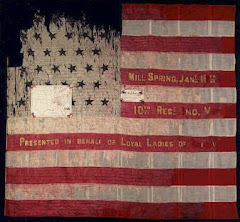
The 86th and 79th Indiana Regiments were temporarily consolidated into one regiment, under the command of Col. Heftner of the 79th and Col. Dick of the 86th Ind., the consolidation only to last during this battle. On Monday morning our regiment came in off of picket, where we had been on duty for 24 hours. Immediately after dinner we were formed in line and marched out near our picket lines. Our Division was formed in column by Brigades- the 79th and 86th constituting the front line of our brigade. The 19th Ohio, then on picket, advanced as skirmishers, the rest of the brigade coming up to it’s support. Gen. Willich’s brigade was on our right and Gen. Wagner’s on our left. A brisk skirmish fire was kept up by each party as we advanced, and they fell back until within shooting distance of their reserves when they opened quite lively on us. These were gallantly charged and driven about a mile, many of them being captured. Here we established our line, threw up breastworks, fell trees for abates, and held our ground until Wednesday about half past three in the afternoon, when Gen. Sherdian, who had advanced to the left of us, in undertaking to flank and turn the position of the enemy, was so hotly engaged that fears for his safety were entertained, and to relieve him, we were ordered to advance about a half mile farther to the front, and charge a line of rebel breastworks and divert the fire of rebel guns on Missionary Ridge. At the command we advanced in fine order, on the double quick, charged and took that line of enemy defenses, and still charged on and on until the foot of Missionary Ridge was gained, and on up the Ridge still we charged against eight pieces of heavy artillery directly in our front; thirty more pieces of artillery constantly pouring their fire upon us both from the right and left, and Gen. Hardee’s Corps of three entire Divisions in our front, right and left, from behind breastworks pouring their galling fire into us. On up the mountain still charged the noble 86th and 79th. The top of the mountain is at length reached. The enemy stand to their guns that are belching forth their missiles of death. Their infantry rally close behind their breastworks and fill the air with musket-balls. Inch by inch the ground is gained; their firing becomes weaker. Whenever a head is shown above the breastworks it is doomed by the unerring aim of the Indiana riflemen. To our right and left all stop in their charge to know the result of the gallant charge of our boys. Generals hold their breaths and tremble. Gen. Grant, anxiously watching our every movement, says, “they can’t make it.” The enemy rallies to the defense of this fort, and volley after volley of deadly effect is poured upon us. Our boys never falter, they take deadly aim and every trigger pulled is a death knell to some poor rebels soul. Inch by inch our gallant boys crowd upon the ramparts of the enemy! The flag of the 86th floats upon their breastworks and our men are in the fort. Some of the enemy lay flat behind their breastworks, praying for us not to kill them; some fight on until shot down at the muzzles of our rifles; thousands rush over the mountain and down through the woods; while many rush along the brow of the mountain and rally in the next fort still to defeat the possession of the ridge. This fort gained on a charge, our men to the left to assist others is carrying the long range of forts still between us and the river, and for a distance of two miles on still goes the 86th and 79th to contribute their share of the work in hurling from thence the enemy and these forts are only taken in regular succession after the arrival of our regiments. The flag of the 86th being the first flag planted by our troops upon both forts, and the last fort captured on the left in the great battle. Night closes the scene, the entire range of heights known as Missionary Ridge having fallen into our possession, together with 38 pieces of artillery, wagon loads of small arms, and prisoners of every grade in almost countless numbers.
No sooner had our flag been planted upon the first fort which was taken, than Gen. Grant left his seat at Fort Wood and at the top of the speed of his noble war- horse dashed over to the ridge, his first inquiry being to ask whose flag it was that first planted on the fort. He said our charge was the grandest thing of the whole war. The 86th and 79th are now on everybody’s tongue. All are enthusiastic and unbounded in our praise. These two regiments have not only won imperishable renown by their heroic conduct, but they have added new luster to American arms. The most brilliant charge recorded in the annals of history fails to furnish its equal. It must be bore in mind that it was a charge of only four hundred men, over two miles in distance, on the double quick, to a mountain height and then up that steep mountain side, eighteen hundred feet, capturing a fort considered impregnable and garrisoned by men well armed as men could be, and whose numbers exceeded ours as greatly as the position was advantageous for defense. Wednesday night we rested in the fort we had first taken, and remained there quietly until Thursday night about nine o’clock, when we returned to camp. The night after these grand achievements of our arms, the enemy was fleeing southward, applying the torch to every bridge; pontoon, station and store-house, illuminating the vast valley before us with the light of their burning property.
Where all done so well it might seem invidious to particularize individuals who have greatly distinguished themselves , but I cannot forebear mentioning a few whose noble bearing come directly under my notice. Col. Dick of the 86th, and Col. Heftner were all the time in their places, nobly and fearlessly discharging their duty commanding universal admiration by their coolness, decision and tact. Captain W. S. Sims, commanding the color company, was at the head of his men, bravely calling them forward. From the time we commenced the ascent of the mountain, it became evident to all that his conduct here would,, if possible surpass that at Chickamauga. Steadily he led his men forward until their flag was planted on the fort and it in our full possession; when calling them onward, he never ceased his efforts until the last fort, with our regimental flag proudly waving over it, was greeting Fort Wood, he having placed our flag there with his own hands. We returned to the ground selected for us to occupy, having in our possession the Major of the 32nd Arkansas, whom Capt. Sims captured himself, whilst the rebel officer was endeavoring to capture our flag. Never did men do better than the boys of our company. They all done their whole duty. Eli N. Tipton, a brave boy that feared no rebel noise, would have been the first to enter the fort, but fell mortally wounded by a musket shot in the head, while calling to the other boys to follow him into the fort. Private John Kent received a very severe wound in the neck about the same time and near the same place where Tipton fell. Oliver Wood, private, had his arm broken, previously, in ascending the mountain; and Sergeant Jas. F. Robertson fell, mortally wounded, when about half way up. These constitute all the casualties to our company in this unequalled charge. Capt. Carnahan placed himself at the head of his boys and led them most gallantly. Capt. Southard was shot in the breast and instantly expired, at the head of his men, when about half way up the mountain. His conduct is well spoken by all who witnessed him on the battlefield, and his death is severely felt, not only by his own company, but by all the officers and men of the regiment. Poor Billy! His is another good life given for our country. The other casualties sustained by his company are Sergeant B. F. Snyder, severely wounded in left hip; Corporal Tilman A. Howard, slightly wounded in left breast; privates Morris Welch, severely, through the right arm; James Herrington, slightly in left side; Wm. M. Saunders, slightly on left elbow. Lieutenant John Yount was pretty severely bruised by a fall, but it did not prevent him from bravely leading on the noble boys of Company K. “Long may he wave,” and enjoy the honors so nobly won. Captains Garner, Gregory, Stephens, Rodman and Ream, and Lieutenants McInerty, Goram, Turk, Brant, Hough and Olive, deserve great credit for their gallantry throughout the battle. Adjutant Darwin Thomas, here, as at Chickamauga, distinguished himself by his coolness and bravery. Major Jacob Dick was wounded in the leg, early after the ascent of the hill was commenced, whilst gallantly cheering the men forward. In fact all have crowned themselves heroes in these great achievements which have blest our arms with victory. There names will live as long as Indiana has a place in the memory of men, and brilliant deeds of arms remains a theme for praise. Napoleon and Wellington would have glorified, as Grant glories, to command such men.
\
The rebel Major, captured by Capt. Sims, when asked what he thought of our charge, replied; “Sir, troops so few in numbers, that will charge and take such works as these when so well defended, would charge through hell. There is nothing on record to compare with what they have here done.” The men were pleased that they had Col’s Dick and Heftner to command them. They have very justly an exalted opinion of the judgment and military capacity of these gallant chieftains, and will go where these Colonel’s would order them, let what may obstruct their way. Whilst I am writing, a complimentary address from Brigadier General Wood, commanding our Division, says that “our achievements are unequaled in the annals of military warfare.”
Sergeant Henry Newton Ornbaun of the 79th, I saw fall, severely wounded in the thigh, whilst bravely charging the rebel breastworks. I hope he may soon be able for duty again , for he is one of the bravest and best soldiers. Sergeant Sater and private Saunders were near me most of the time after we entered the first fort, and I never saw braver men. Saunders says this fight has knocked the last drop of Butternut blood out of his veins. While charging the rebel works and when within about twenty feet of the fort, I noticed a rebel raise up and level his piece in a very uncomfortable position for me. At the same time I noticed that the brave young Robert G. Thornton sent a ball through his head. There are many incidents that occurred during this battle, that I have not time now but will relate in my next.
Bragg’s Army is badly cut up. The town is filled with prisoners. I have heard no estimate of losses, but in a few days it will be accurately known, as we hold all the ground fought over. If we can only manage to arrest their flight long enough to give them one more thrashing equal to the last one, there will be no Southern army left to prevent us all returning home to eat our Christmas dinners.
Most of our wounded are in critical condition, but our Surgeon, Joseph S. Jones, is a most accomplished physician and gentleman, untiring in the discharge of his duties, and all that medicinal science can do for the sick and wounded, will be done. They are all in our possession, which must be a great satisfaction to both them and their friends.
Most respectfully.
W. H. Laymon
Thursday, December 10, 1863
Camp 86th Regiment Indiana Vols.
Chattanooga, Tenn, Nov.27, 1863
Editor Journal: - Now that the noise and din of the bloody strife around Chattanooga is over, and I am again quietly resting in the comfortable quarters of our former camp, I will tell you of the part enacted in these engagements by the gallant boys of the 86th.
The 86th and 79th Indiana Regiments were temporarily consolidated into one regiment, under the command of Col. Heftner of the 79th and Col. Dick of the 86th Ind., the consolidation only to last during this battle. On Monday morning our regiment came in off of picket, where we had been on duty for 24 hours. Immediately after dinner we were formed in line and marched out near our picket lines. Our Division was formed in column by Brigades- the 79th and 86th constituting the front line of our brigade. The 19th Ohio, then on picket, advanced as skirmishers, the rest of the brigade coming up to it’s support. Gen. Willich’s brigade was on our right and Gen. Wagner’s on our left. A brisk skirmish fire was kept up by each party as we advanced, and they fell back until within shooting distance of their reserves when they opened quite lively on us. These were gallantly charged and driven about a mile, many of them being captured. Here we established our line, threw up breastworks, fell trees for abates, and held our ground until Wednesday about half past three in the afternoon, when Gen. Sherdian, who had advanced to the left of us, in undertaking to flank and turn the position of the enemy, was so hotly engaged that fears for his safety were entertained, and to relieve him, we were ordered to advance about a half mile farther to the front, and charge a line of rebel breastworks and divert the fire of rebel guns on Missionary Ridge. At the command we advanced in fine order, on the double quick, charged and took that line of enemy defenses, and still charged on and on until the foot of Missionary Ridge was gained, and on up the Ridge still we charged against eight pieces of heavy artillery directly in our front; thirty more pieces of artillery constantly pouring their fire upon us both from the right and left, and Gen. Hardee’s Corps of three entire Divisions in our front, right and left, from behind breastworks pouring their galling fire into us. On up the mountain still charged the noble 86th and 79th. The top of the mountain is at length reached. The enemy stand to their guns that are belching forth their missiles of death. Their infantry rally close behind their breastworks and fill the air with musket-balls. Inch by inch the ground is gained; their firing becomes weaker. Whenever a head is shown above the breastworks it is doomed by the unerring aim of the Indiana riflemen. To our right and left all stop in their charge to know the result of the gallant charge of our boys. Generals hold their breaths and tremble. Gen. Grant, anxiously watching our every movement, says, “they can’t make it.” The enemy rallies to the defense of this fort, and volley after volley of deadly effect is poured upon us. Our boys never falter, they take deadly aim and every trigger pulled is a death knell to some poor rebels soul. Inch by inch our gallant boys crowd upon the ramparts of the enemy! The flag of the 86th floats upon their breastworks and our men are in the fort. Some of the enemy lay flat behind their breastworks, praying for us not to kill them; some fight on until shot down at the muzzles of our rifles; thousands rush over the mountain and down through the woods; while many rush along the brow of the mountain and rally in the next fort still to defeat the possession of the ridge. This fort gained on a charge, our men to the left to assist others is carrying the long range of forts still between us and the river, and for a distance of two miles on still goes the 86th and 79th to contribute their share of the work in hurling from thence the enemy and these forts are only taken in regular succession after the arrival of our regiments. The flag of the 86th being the first flag planted by our troops upon both forts, and the last fort captured on the left in the great battle. Night closes the scene, the entire range of heights known as Missionary Ridge having fallen into our possession, together with 38 pieces of artillery, wagon loads of small arms, and prisoners of every grade in almost countless numbers.
No sooner had our flag been planted upon the first fort which was taken, than Gen. Grant left his seat at Fort Wood and at the top of the speed of his noble war- horse dashed over to the ridge, his first inquiry being to ask whose flag it was that first planted on the fort. He said our charge was the grandest thing of the whole war. The 86th and 79th are now on everybody’s tongue. All are enthusiastic and unbounded in our praise. These two regiments have not only won imperishable renown by their heroic conduct, but they have added new luster to American arms. The most brilliant charge recorded in the annals of history fails to furnish its equal. It must be bore in mind that it was a charge of only four hundred men, over two miles in distance, on the double quick, to a mountain height and then up that steep mountain side, eighteen hundred feet, capturing a fort considered impregnable and garrisoned by men well armed as men could be, and whose numbers exceeded ours as greatly as the position was advantageous for defense. Wednesday night we rested in the fort we had first taken, and remained there quietly until Thursday night about nine o’clock, when we returned to camp. The night after these grand achievements of our arms, the enemy was fleeing southward, applying the torch to every bridge; pontoon, station and store-house, illuminating the vast valley before us with the light of their burning property.
Where all done so well it might seem invidious to particularize individuals who have greatly distinguished themselves , but I cannot forebear mentioning a few whose noble bearing come directly under my notice. Col. Dick of the 86th, and Col. Heftner were all the time in their places, nobly and fearlessly discharging their duty commanding universal admiration by their coolness, decision and tact. Captain W. S. Sims, commanding the color company, was at the head of his men, bravely calling them forward. From the time we commenced the ascent of the mountain, it became evident to all that his conduct here would,, if possible surpass that at Chickamauga. Steadily he led his men forward until their flag was planted on the fort and it in our full possession; when calling them onward, he never ceased his efforts until the last fort, with our regimental flag proudly waving over it, was greeting Fort Wood, he having placed our flag there with his own hands. We returned to the ground selected for us to occupy, having in our possession the Major of the 32nd Arkansas, whom Capt. Sims captured himself, whilst the rebel officer was endeavoring to capture our flag. Never did men do better than the boys of our company. They all done their whole duty. Eli N. Tipton, a brave boy that feared no rebel noise, would have been the first to enter the fort, but fell mortally wounded by a musket shot in the head, while calling to the other boys to follow him into the fort. Private John Kent received a very severe wound in the neck about the same time and near the same place where Tipton fell. Oliver Wood, private, had his arm broken, previously, in ascending the mountain; and Sergeant Jas. F. Robertson fell, mortally wounded, when about half way up. These constitute all the casualties to our company in this unequalled charge. Capt. Carnahan placed himself at the head of his boys and led them most gallantly. Capt. Southard was shot in the breast and instantly expired, at the head of his men, when about half way up the mountain. His conduct is well spoken by all who witnessed him on the battlefield, and his death is severely felt, not only by his own company, but by all the officers and men of the regiment. Poor Billy! His is another good life given for our country. The other casualties sustained by his company are Sergeant B. F. Snyder, severely wounded in left hip; Corporal Tilman A. Howard, slightly wounded in left breast; privates Morris Welch, severely, through the right arm; James Herrington, slightly in left side; Wm. M. Saunders, slightly on left elbow. Lieutenant John Yount was pretty severely bruised by a fall, but it did not prevent him from bravely leading on the noble boys of Company K. “Long may he wave,” and enjoy the honors so nobly won. Captains Garner, Gregory, Stephens, Rodman and Ream, and Lieutenants McInerty, Goram, Turk, Brant, Hough and Olive, deserve great credit for their gallantry throughout the battle. Adjutant Darwin Thomas, here, as at Chickamauga, distinguished himself by his coolness and bravery. Major Jacob Dick was wounded in the leg, early after the ascent of the hill was commenced, whilst gallantly cheering the men forward. In fact all have crowned themselves heroes in these great achievements which have blest our arms with victory. There names will live as long as Indiana has a place in the memory of men, and brilliant deeds of arms remains a theme for praise. Napoleon and Wellington would have glorified, as Grant glories, to command such men.
\
The rebel Major, captured by Capt. Sims, when asked what he thought of our charge, replied; “Sir, troops so few in numbers, that will charge and take such works as these when so well defended, would charge through hell. There is nothing on record to compare with what they have here done.” The men were pleased that they had Col’s Dick and Heftner to command them. They have very justly an exalted opinion of the judgment and military capacity of these gallant chieftains, and will go where these Colonel’s would order them, let what may obstruct their way. Whilst I am writing, a complimentary address from Brigadier General Wood, commanding our Division, says that “our achievements are unequaled in the annals of military warfare.”
Sergeant Henry Newton Ornbaun of the 79th, I saw fall, severely wounded in the thigh, whilst bravely charging the rebel breastworks. I hope he may soon be able for duty again , for he is one of the bravest and best soldiers. Sergeant Sater and private Saunders were near me most of the time after we entered the first fort, and I never saw braver men. Saunders says this fight has knocked the last drop of Butternut blood out of his veins. While charging the rebel works and when within about twenty feet of the fort, I noticed a rebel raise up and level his piece in a very uncomfortable position for me. At the same time I noticed that the brave young Robert G. Thornton sent a ball through his head. There are many incidents that occurred during this battle, that I have not time now but will relate in my next.
Bragg’s Army is badly cut up. The town is filled with prisoners. I have heard no estimate of losses, but in a few days it will be accurately known, as we hold all the ground fought over. If we can only manage to arrest their flight long enough to give them one more thrashing equal to the last one, there will be no Southern army left to prevent us all returning home to eat our Christmas dinners.
Most of our wounded are in critical condition, but our Surgeon, Joseph S. Jones, is a most accomplished physician and gentleman, untiring in the discharge of his duties, and all that medicinal science can do for the sick and wounded, will be done. They are all in our possession, which must be a great satisfaction to both them and their friends.
Most respectfully.
W. H. Laymon